
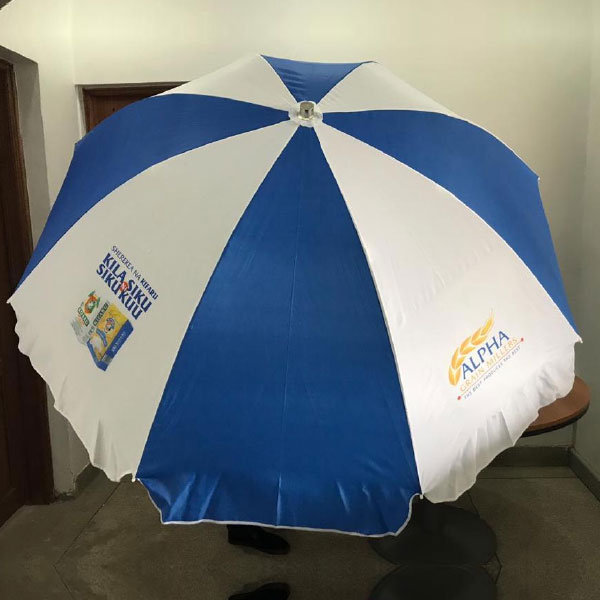
The Kenyan sun and coastal salt air are parasol killers. UV radiation, humidity, wind gusts, and salt spray fade fabrics, corrode metal, and force many businesses to replace branded parasols within 6–12 months. That’s a wasted marketing investment and a dent in your brand image.
A well-made, correctly maintained parasol from Waves Branding should be a 3-year investment, not a seasonal expense. With the right frame, UV-resistant canopy fabric, cleaning routines, and safety rules, you protect both the parasol and your brand. This guide is for hotel and resort managers, restaurant owners, event planners, and corporate procurement officers in Kenya. Read on for the exact materials, maintenance steps, and procurement tips you need to keep parasols looking fresh and working reliably.
Start with Quality: Why the “Aluminum Frame” is Non-Negotiable
When buying commercial outdoor umbrellas (parasol maintenance begins at purchase), frame choice determines longevity.
Wood frames look attractive but warp and rot in humid, coastal climates like Mombasa and Diani. They require constant varnish and are vulnerable to insect and fungal attack.
Steel frames are very strong but need excellent anti-corrosion treatment. In coastal or high-humidity locations, even plated steel can pit and rust over time, compromising joints and screws.
Aluminum parasol frame — the smart choice for Kenyan businesses:
- Corrosion resistance: Aluminum does not rust and performs well in salt-air environments.
- Lightweight but strong: Easier to handle during installation and relocation, but structurally sound.
- Flexibility in finishes: Powder-coating gives an extra protective layer that resists chipping and chemical attack.
The Waves standard: We use powder-coated aluminum on all our commercial parasols. The powder coat adds a second barrier against moisture and UV-driven breakdown, protecting structural integrity and finish. If you want 3+ years of service, insist on an aluminum parasol frame with a quality powder coat rather than steel or untreated options.
UV-Resistance and Fabric Care: Beating the Kenyan Sun
The science of fading: UV rays break molecular bonds in dyes. Cheap nylon or untreated polyester has dye on the surface; prolonged sun exposure causes pigments to fade quickly and fabrics to become brittle. That’s why your logo slowly disappears from cheap parasols.
The solution (materials matter):
- Solution-dyed acrylic (e.g., Sunbrella): Pigment is dyed into the fiber during manufacture — it won’t wash or fade off the surface. Solution-dyed acrylics have superior colorfastness and resist UV degradation.
- Heavy-duty polyester with UV inhibitors: A more cost-effective option than acrylic but still engineered for outdoor use when treated with UV stabilizers and a weatherproof topcoat.
- UV-resistant branding: Use substrates and inks rated for outdoor UV exposure — this ensures your logo and Pantone colors hold up under Kenya’s equatorial sun.
Maintenance tip: When not in use, always cover parasols with a protective sleeve. A heavy-duty cover dramatically reduces direct UV and moisture exposure. Small habit: close and cover every sunset. This single action can easily double the life of the print.
Step-by-Step Cleaning Protocol for Commercial Parasols
Regular cleaning stops small problems from becoming irreparable.
Weekly Dusting
- Brush or blow off dust, pollen, and debris with a soft-bristle brush or leaf blower on a low setting.
- Why: Dust holds pollutants that, when wet, create organic staining and accelerate fabric breakdown.
Monthly Visual Check
- Inspect for small tears, loose stitching, or early mold spots. Catching these early is cheaper than a full replacement.
Deep Cleaning (Quarterly or as needed)
- Open the parasol fully in a shaded area.
- Rinse gently with lukewarm water to remove surface dirt.
- Apply a mild soap (pH-neutral dish soap or specific fabric cleaner) with a soft sponge — never bleach or harsh detergents (they strip UV inhibitors and degrade fabric).
- Rinse thoroughly until all soap is removed.
- Leave the parasol open to air dry completely before closing or putting on the cover.
Important: Do not machine-wash canopies or use pressure washers. Harsh mechanical cleaning strips coatings and shortens lifespan.
Mold Prevention
- Never close or fold a damp parasol. Trapped moisture + heat = mold and black spotting.
- If you catch mold, treat it with a diluted vinegar solution or a mild cleaner recommended for outdoor fabrics, then rinse and dry completely.
A disciplined cleaning protocol is the fastest route to long-term parasol maintenance.
Mechanical Longevity: Caring for the Opening System
The mechanical parts — crank, hub, ribs, and joints — are wear points. Proper care prevents squeaks and catastrophic failures.
Lubrication
- Use a silicone-based lubricant on moving joints every 3 months. Silicone repels water and won’t attract grime like oil-based lubricants do.
- Apply sparingly to hinges, pulleys, and the crank mechanism.
Tension & Fasteners
- Tighten bolts and check rivets quarterly. Loose fittings create micro-movements that quickly enlarge and fracture metal joints.
The Base Check
- The base is the least glamorous but most critical part of parasol maintenance. A wobbly base transfers uneven force into ribs and joints during gusts, leading to fatigue and breakage.
- For commercial outdoor umbrellas, match base weight to parasol size: heavier canopies require heavier ballast. Concrete, granite, or water-filled base options are commonly used. Ensure bases are level and anchored if on decking or uneven ground.
Small mechanical checks (lubricate, tighten, stabilize) save you big replacement bills.
Wind Safety: The “10-O’clock Rule.”
No parasol can be made immune to wind. The right safety rules, however, minimize risk.
The “10-o’clock Rule” (practical, simple):
If conditions are breezy enough that loose napkins or lightweight items are visibly moving (roughly winds strong enough to toss a napkin), close your parasols. This is a simple field test staff can use without measuring devices.
Additional safety guidance:
- Close parasols during sudden gusts or when the weather app warns of gusty winds.
- Avoid using umbrellas in sustained high winds, even if vented — the risk to people and property is too high.
The Waves advantage — Wind-Vent feature:
Waves Branding parasols include a vented canopy (wind-vent). This design lets high air pressure escape through the top, reducing uplift and the chance of the parasol inverting or detaching. Combined with the 10-o’clock rule and a secure base, vents dramatically reduce wind-related failures.
Designing for Durability: Fabric, Print & Color Matching
Your canopy design choices affect longevity.
- Single-panel vs full-canopy printing: Full-canopy or step-and-repeat patterns look premium and maintain visibility from multiple angles. However, ensure the fabric and inks chosen are rated for UV-resistant branding.
- Color matching: Fabric dyes and Pantone inks behave differently. Always request a physical sample (or swatch) for sign-off to ensure brand colors match under natural light.
- Edge finishing & seam reinforcement: Reinforced seams and hemmed edges reduce tearing at stress points — a small extra cost that prevents early failures.
Why Procurement Managers Trust Waves Branding
Procurement decisions focus on the total cost of ownership. Waves Branding helps reduce that cost through:
- After-sales support: We keep stock of replacement canopies (skins) so you can re-skin existing frames instead of buying full units — a cost-saving and sustainable option.
- Maintenance training & checklists: We provide a downloadable Daily Care Checklist for housekeeping teams so daily routines (close and cover, dry before closing, weekly dusting) become standard operating procedure.
- Service area & installation: We deliver and install across Kenya — Nairobi, Watamu and coastal resorts, Naivasha lakeside hotels, and safari lodges in the Maasai Mara — and we handle export logistics if you operate regionally.
- Warranty & parts: We offer spare ribs, vented replacements, and handle options — minimizing downtime for hotels and event venues.
Procurement pros choose Waves because we partner on lifecycle cost, not just the initial price.
Conclusion: Protect Your Brand’s Image
A faded, torn, or wobbly parasol tells guests your property cuts corners. Conversely, clean, vibrant parasols communicate care, professionalism, and consistency. Protect your brand by making parasol maintenance part of property upkeep:
- Buy right: Aluminum parasol frame + powder-coating + UV-resistant canopy fabrics.
- Clean regularly: Weekly dusting; quarterly deep clean with mild soap; dry fully before folding.
- Maintain mechanically: Lubricate joints every 3 months; inspect bases and fastenings.
- Follow safety rules: Use the 10-o’clock rule; rely on vented canopies and secure bases.
Your parasols should be an asset, not a liability. With Waves Branding’s commercial outdoor umbrellas and proven maintenance regimen, your branded parasols will protect guests and advertise your hotel or restaurant with pride for years.