
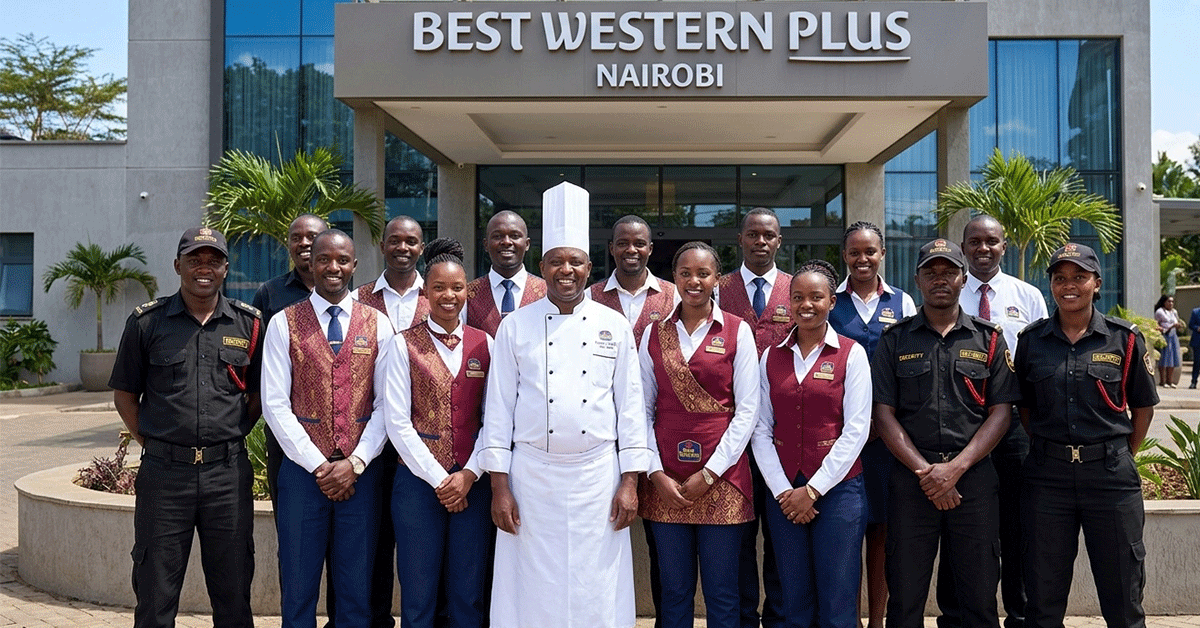
The question that HR and procurement managers at Kenyan hotels, lodges, and restaurants encounter every uniform cycle is the same: sublimation or embroidery? Both methods produce professional-looking branded uniforms. Both are used by hospitality operations across Kenya. But they produce different results on different fabrics, at different price points, and with different durability profiles under the specific washing and use conditions that hospitality workwear is subjected to.
The correct answer depends on the garment type, the fabric, the design, and how the uniform will be maintained. This guide explains what each method does, where each performs best for hospitality uniforms in Kenya, and ends with a clear recommendation matrix so your procurement team can specify correctly for each item in your uniform range.
Waves Branding produces branded hospitality uniforms in-house at our Keekorok Road, Nairobi CBD facility. Contact our sales team at +254 794 31 44 31 or sales@wavesbranding.co.ke to request a quote.
How Dye Sublimation Works on Hospitality Uniforms
Dye sublimation is a heat-based process in which specialized inks convert to gas under pressure at 180–200°C, then bond permanently within the polyester fabric fibres. The resulting print is part of the fabric itself — smooth to the touch, vibrant in colour, and wash-permanent. There is no raised surface, no risk of peeling, and no colour fading under normal laundering.
For hospitality uniforms, the key practical advantage is all-over design capability. Sublimation can reproduce a brand’s full colour palette — including gradients, photographic patterns, and geometric designs — across the entire surface of a garment, not just at a fixed logo placement point. A reception desk uniform with a custom colour-block design, a restaurant service shirt with a subtle branded pattern across the body, or a housekeeping dust coat in precise brand colours — all are produced using sublimation.
Sublimation constraints for hospitality: The method requires a minimum of 65% polyester content. It is not suitable for 100% cotton fabrics or for fabrics that will be commercially laundered at very high temperatures (above 60°C) with aggressive chemical detergents, which can accelerate colour shift in lightweight polyester. For heavy-use back-of-house uniforms laundered industrially, confirm fabric and laundering specifications with our sales team before ordering.
How Embroidery Works on Hospitality Uniforms
Embroidery applies a design using thread stitched directly into the fabric by a computerized embroidery machine. The result is a raised, textured logo that reads as premium, the standard finish for formal hospitality environments, upscale hotel front-of-house uniforms, and any context where a tactile, three-dimensional brand mark is part of the service presentation.
Embroidery is fabric-agnostic; it works on cotton, polyester, wool blends, and most woven fabrics used in hospitality uniforms. It does not require a specific polyester content. A 100% cotton formal shirt can be embroidered, but it cannot be sublimated.
Embroidery durability is excellent for logo placements on well-constructed garments — the thread is structurally integrated into the fabric. Under commercial laundering, embroidered logos outlast vinyl and screen-printed alternatives significantly. The constraint is design complexity: embroidery reproduces simple, clean logos, text, and geometric shapes accurately. Photographic images, fine gradients, and designs with more than eight to ten thread colours become expensive and technically impractical.
Head-to-Head Comparison for Hospitality Uniforms
| Type | Dye sublimation | Embroidery |
|---|---|---|
| Best fabric | 100% polyester or high-poly blend | Cotton, polyester, wool blend — any woven |
| Design range | Unlimited — full colour, gradients, all-over | Simple logos, text, geometric shapes |
| Finish | Smooth, flat — ink is in the fabric | Raised, textured — premium tactile feel |
| Colour range | Unlimited — any hex or Pantone reference | Limited by thread colour options |
| Durability (laundering) | Wash-permanent on polyester | Excellent on any fabric — thread is structural |
| Per-unit cost at volume | Competitive at 50+ pieces | Higher at small quantities; competitive at large runs |
| All-over printing | Yes — full garment surface | No — logo/badge placement only |
| Brand pattern capability | Yes — body patterns, colour-block designs | No |
| Best for hospitality | Service shirts, dust coats, uniforms with patterns | Formal shirts, caps, premium front-of-house |
Which Method Fits Which Hospitality Role
Different roles in a hospitality operation have different uniform requirements — and the correct branding method varies accordingly.
Front-of-house: reception, concierge, and management: Formal corporate shirts in cotton or cotton-poly blend — embroidery is the preferred method for this category. A small, cleanly executed embroidered logo on the left chest of a formal shirt communicates the hotel’s brand standard without the visual weight of a printed design. For properties with a brand identity that incorporates specific pattern work across the body of the garment, sublimation on a 100% polyester corporate shirt is the alternative.
Food and beverage service staff: Polo shirts or service shirts in 100% polyester — sublimation is the standard. The fabric composition supports sublimation, the garments are washed daily, and the durability advantage of sublimation over embroidery on polyester (embroidery backing material can retain moisture on polyester, potentially causing garment distortion over time) makes sublimation the technically better choice on this fabric type.
Housekeeping and back-of-house: Dust coats or overalls in 100% polyester or polycotton — sublimation for the polyester option, DTF printing for cotton-blend fabrics. These garments are subject to the most aggressive laundering in a hotel environment. Sublimation’s wash-permanent bonding outperforms both embroidery on polyester and vinyl alternatives.
Outdoor and recreation staff: Polo shirts, activity vests, and sports kit items — sublimation on 100% polyester performance fabric. The physical demands and outdoor exposure of guest activities make sublimation the clear choice for durability.
Caps and headwear Embroidery is the standard for all woven and structured cap styles. Sublimation on fabric cap panels is technically possible, but less common — embroidery produces a cleaner finish on the structured cap surfaces used in most hospitality environments.
Recommendation Matrix: Sublimation or Embroidery?
Use this matrix to specify the correct method for each item in your hotel’s uniform range.
Choose dye sublimation if:
- ☑ The fabric is 100% polyester or a high-polyester blend (65%+)
- ☑ The design uses more than two colours, gradients, or all-over patterns
- ☑ The garment will be laundered daily or near-daily
- ☑ The role requires outdoor or physically active use
- ☑ You need consistent colour matching across large quantities
- ☑ The garment is a polo shirt, service shirt, dust coat, or activity wear item
Choose embroidery if:
- ☑ The fabric is cotton, cotton-poly blend, or a woven formal shirt fabric
- ☑ The design is a simple logo, crest, or text — one to eight thread colours
- ☑ A raised, premium tactile finish is part of the brand presentation
- ☑ The garment is a formal front-of-house shirt, blazer, or cap
- ☑ The placement is a single badge-sized logo on the left chest or sleeve
When to use both: A hotel with a multi-role uniform range will commonly use sublimation for service staff polyester shirts and housekeeping dust coats, and embroidery for management formal shirts and branded caps — procured from the same supplier on the same purchase order.
Waves Branding produces both sublimation-printed and embroidered hospitality uniforms from our Keekorok Road, Nairobi CBD facility. Contact our sales team at +254 794 31 44 31 or sales@wavesbranding.co.ke to discuss your property’s uniform specification. For the full range of corporate uniform products, see our corporate uniforms and branded workwear page.
Frequently Asked Questions
What is the best uniform branding method for hotels in Kenya?
The correct method depends on the garment type. For polyester service shirts, polo shirts, and housekeeping dust coats, dye sublimation is recommended for wash-permanent colour and all-over design capability. For formal cotton front-of-house shirts and caps, embroidery produces a premium raised finish. Waves Branding produces both methods in-house at Keekorok Road, Nairobi CBD. Contact +254 794 31 44 31 or sales@wavesbranding.co.ke.
Does embroidery or sublimation last longer on hotel uniforms in Kenya?
Both methods are durable, but on different fabrics. Sublimation is wash-permanent on 100% polyester — the ink bonds within the fibres and cannot peel or crack under any laundering conditions. Embroidery is structurally integrated into any woven fabric and outlasts vinyl or screen print alternatives significantly. For polyester hospitality uniforms that are washed daily, sublimation provides the stronger durability guarantee.
Can a hotel in Kenya order both sublimation and embroidered uniforms from one supplier?
Yes. Waves Branding produces dye-sublimation-printed and embroidered uniforms from a single in-house facility in Nairobi CBD. A single purchase order can cover all garment types — sublimation polo shirts for service staff, embroidered formal shirts for management, and sublimation dust coats for housekeeping. Contact +254 794 31 44 31 or sales@wavesbranding.co.ke.
How long does it take to produce branded hotel uniforms in Kenya?
Standard production time at Waves Branding is 5–7 business days from artwork and specification approval. For hotel uniform orders covering multiple garment types and roles, allow 10–14 business days from brief submission to delivery. Contact our sales team to confirm current lead times for your specific order.
What information do I need to provide to get a quote for hotel uniforms in Kenya?
Provide: garment types and quantities per role, fabric specification if known, size breakdown, brand logo files (AI or PDF for sublimation; AI or PDF for embroidery digitizing), Pantone or hex colour references, and required delivery date. Waves Branding’s design team will prepare a digital proof for each garment type before production begins.