
In the modern Kenyan corporate landscape, a uniform is no longer just “work clothes.” It is a mobile billboard, a safety requirement, and a primary driver of employee morale. Whether you are managing a security firm in Nairobi, a luxury resort in Diani, or a manufacturing plant in Thika, the quality of your team’s apparel speaks volumes about your brand’s standards.
As we move through 2026, the shift in uniform printing in Kenya has moved toward “Quiet Luxury”, subtle branding, high-performance fabrics, and sustainable production methods.
This guide provides a comprehensive deep dive into everything you need to know about sourcing, designing, and maintaining professional uniforms in East Africa.
1. Why Professional Uniforms Matter for Your Brand
Before diving into fabrics and inks, it is essential to understand the ROI of a high-quality uniform program.
- Brand Authority: In a crowded market like Nairobi, professional attire instantly builds trust. A well-fitted, crisply branded uniform tells the client that your business is organized and reliable.
- Employee Equality & Unity: Uniforms remove the “wardrobe pressure” from employees, creating a level playing field and fostering a sense of belonging.
- Safety & Compliance: For industrial and medical sectors, uniforms are functional PPE. Proper stitching and fabric choice can prevent workplace accidents.
- Cost-Effectiveness: Providing durable uniforms reduces the long-term cost of frequent replacements caused by “fast fashion” workwear that fades after three washes.
The “Heavy-Duty” Frontier: Industrial Workwear in Kenya
In industrial environments—from the dusty construction sites of Upper Hill to the high-heat manufacturing plants in Athi River—workwear is the first line of defense for your employees. Sourcing industrial apparel in Kenya requires a deep understanding of OSHA (Occupational Safety and Health Act, 2007) compliance and KEBS standards.
1. Safety Compliance & Standards
For a procurement officer, “cheap” can become “expensive” if a batch of overalls fails a safety audit or, worse, leads to a workplace injury.
- KEBS Certification: Ensure your supplier provides garments that meet the Kenya Bureau of Standards requirements for tensile strength and colorfastness.
- The OSHA 2007 Requirement: Under Kenyan law, employers are required to provide “appropriate PPE” (Personal Protective Equipment) at no cost to the employee. This includes high-visibility gear and protective coveralls.
- International Standards (EN & ANSI): If you are working in Oil & Gas or Energy, look for EN ISO 20471 (High-visibility) and EN 11612 (Heat and Flame protection).
2. The Technical Blueprint of a Quality Overall
A Waves Branding industrial garment isn’t just sewn; it’s engineered. Look for these four “Structural Anchors”:
- Fabric Weight (GSM): Industrial workwear should range between 240 GSM and 300 GSM. Anything lighter is a “dustcoat,” not a protective overall.
- Triple-Stitched Seams: Standard stitching will pop under the physical strain of climbing or lifting. We utilize triple-felled seams on the crotch, armpits, and side-legs to ensure the garment never rips during duty.
- Bar-Tacking: Every pocket corner and zipper end must be “bar-tacked” (extra-dense zig-zag stitching) to prevent tearing at stress points.
- YKK Zippers & 3M Reflective Tapes: We recommend heavy-duty brass zippers for longevity and 3M™ Scotchlite™ reflective tapes for night-shift workers. Generic tapes often lose their reflectivity after just 5 washes.
| Industry | Recommended Fabric | Key Feature |
| Construction & Mining | 100% Cotton Twill | Breathable but rugged; prevents “heat stress” on-site. |
| Mechanical & Logistics | Heavy-Duty Polycotton | Resists oil stains and prevents shrinkage during industrial washing. |
| Welding & Electrical | Flame-Retardant (FR) Treated | Self-extinguishes if hit by sparks or arc flashes. |
| Food Processing | Anti-Static / Lint-Free | Prevents contamination in sterile environments. |
4. Branding for the “Dirty” Jobs
How do you brand a garment that will be covered in grease, cement, or chemicals?
- The Case for Embroidery: In industrial settings, we almost always recommend embroidery over screen printing. Why? Ink can crack or be “eaten” by industrial solvents. Embroidery thread is dyed-through and chemically resistant, ensuring your logo stays visible for the life of the suit.
- High-Vis Printing: If you must use print (for large back logos on reflector vests), we use Reflective DTF (Direct to Film) which adds an extra layer of safety by making the logo itself reflect light.
Expert Insight: “Athi River and Thika-based manufacturers often struggle with ‘uniform shrinkage.’ We solve this by using Pre-Shrunk (Sanforized) fabrics, ensuring that a ‘Large’ remains a ‘Large’ even after 50 cycles in an industrial laundromat.”
Workwear Tier Comparison: Standard vs. Premium vs. Executive
| Feature | Standard Tier | Premium Tier (Waves Pro) | Executive Tier (The Elite) |
| Best For | One-time events, temp staff, or low-intensity indoor roles. | Daily industrial use, construction, and high-intensity logistics. | Site Managers, Supervisors, and high-risk technical roles. |
| Fabric Type | Lightweight Polycotton (65/35) | Heavy-Duty Cotton Twill or CVC Blend | Cordura® Ripstop or FR-Treated specialized fabric. |
| Fabric Weight | 180–210 GSM | 240–280 GSM | 300+ GSM |
| Stitching | Standard Double-Stitch | Triple-Felled Seams | Triple-Stitched + Full Bar-Tacking at 15+ stress points. |
| Zippers/Hardare | Standard Plastic Zippers | Brass/Metal Zippers | YKK® Industrial Grade + Hidden snap buttons. |
| Reflective Tape | Silver PVC Tape (Reflects light) | 3M™ Scotchlite™ High-Vis | 3M™ Fire-Resistant or Perforated (Breathable) Tape. |
| Branding Method | Screen Printing / DTF | High-Density Embroidery | 3D Puff Embroidery or Laser-Etched Patches. |
| Longevity | 3–6 Months | 12–18 Months | 24+ Months (Built for life). |
2. Masterclass: Printing & Branding Methods for 2026
Choosing the wrong printing method for your fabric is the #1 reason for “branding failure” (peeling logos or cracked prints). Here is the technical breakdown of the four pillars of uniform branding.
A. Embroidery: The Executive Standard
Best for Polos, Button-down shirts, Jackets, and Caps.
- Process: Computerized machines stitch your logo directly into the fabric using high-sheen polyester or rayon threads.
- Pros: Indestructible. It lasts as long as the garment itself. It offers a 3D texture that looks “premium.”
- Cons: Not suitable for very thin fabrics (it can cause “puckering”) or extremely large back-prints.
B. Screen Printing: The Bulk Powerhouse
Best for T-shirts, Totes, and high-volume Promotional Wear.
- Process: Ink is pushed through a mesh stencil (screen) onto the fabric.
- Pros: The most cost-effective method for orders over 100 units. The colors are incredibly vibrant.
- Cons: High setup cost for small orders. Limited to 1–6 colors usually.
C. Dye-Sublimation: The Sportswear King
Best for Football kits, Cycling jerseys, and 100% Polyester “Dry-Fit” shirts.
- Process: Heat turns dye into gas, which then bonds with the fibers of the fabric.
- Pros: The print is part of the fabric. You cannot “feel” the logo. It will never peel, crack, or fade.
- Cons: Only works on white or light-colored 100% Polyester fabrics.
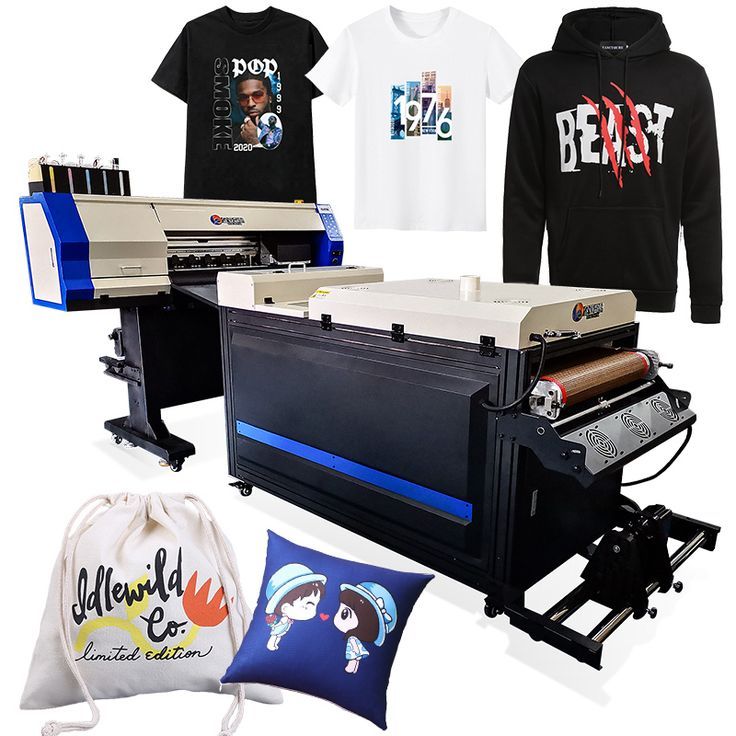
D. DTF (Direct to Film): The New 2026 Disruptor
Best for multi-color logos on almost any fabric.
- Process: Designs are printed on a special film and then heat-pressed onto the garment.
- Pros: Handles complex gradients and high-detail photos perfectly. Works on cotton, polyester, and blends.
- Cons: Has a slight “plastic” feel compared to embroidery or sublimation.
| Method | Best Fabric | Durability | Best Order Size |
| Embroidery | Polycotton / Heavy Cotton | Maximum | 12+ Units |
| Screen Printing | 100% Cotton | High | 100+ Units |
| Sublimation | 100% Polyester | Permanent | Any |
| DTF Printing | Blends / Cotton | Moderate-High | 1–50 Units |
3. Fabric Selection: The “Kenya Climate” Factor
A uniform that works in the cool Highlands of Limuru will be a nightmare for a team in the humidity of Mombasa.
The Top 3 Uniform Fabrics in East Africa:
- CVC (Chief Value Cotton): A blend of 60% Cotton and 40% Polyester. This is the “Goldilocks” of fabrics. It breathes like cotton but doesn’t wrinkle or shrink like pure cotton. Ideal for Nairobi office wear.
- Heavy-Duty Twill: A rugged weave used for overalls and dustcoats. It resists tearing and hides stains well—perfect for the construction and automotive sectors.
- Moisture-Wicking Polyester: In 2026, antimicrobial coatings are standard. These fabrics pull sweat away from the body, making them essential for security guards and hospitality staff working outdoors.
4. Stitching Options & The “Perfect Fit.”
Most branding companies in Kenya are just “printers.” They buy ready-made “blanks” and slap a logo on them. Waves Branding goes further by offering Bespoke Stitching.
Bespoke (Custom) vs. Ready-Made Blanks
- Ready-Made Blanks: Fast turnaround (3-7 days). Best for events or temporary staff.
- Custom Stitching: You choose the pocket placement, contrast collars, and specific sizing (Slim Fit vs. Regular Fit).
- Why it matters: A security guard needs “action pleats” in the back of their shirt to move their arms freely. A waiter needs reinforced pockets to carry heavy tablets or bill folders.
5. Bulk Ordering & The Procurement Process
For a procurement manager, the goal is Quality + Timeliness + Budget.
The Waves Branding Workflow:
- The Audit: We analyze your current uniforms to identify “fail points” (e.g., seams that always rip).
- Sampling: We produce a “Gold Sample” for your approval. Never approve a bulk order of 500 units based on a digital mockup alone.
- Production: Utilizing high-speed embroidery and semi-automatic screen presses.
- Delivery: We ship across Kenya and East Africa, ensuring each package is size-labeled for easy distribution to your staff.
Pro Tip: In Kenya, the “Uniform Season” peaks in December and January. To avoid the rush and lock in lower “Off-Peak” pricing, aim to finalize your procurement in October or November.
6. Quality Control: The “Gikomba-Proof” Test
To ensure your uniforms last 2+ years, we implement a 4-point QC check:
- Color Fastness: We wash-test samples to ensure the dye doesn’t “bleed” onto the white collars.
- Tension Testing: We pull at the seams and buttons to ensure they are reinforced with “cross-stitching.”
- Logo Accuracy: Every embroidered logo is checked for thread density—no “gaps” or loose strings.
- Sizing Consistency: Using standardized African size charts (S through 5XL) to ensure a “Medium” is actually a Medium.
7. Case Study: Refreshing a National Logistics Fleet
Last year, a major logistics company in Nairobi faced a problem: their driver uniforms were fading within 3 months due to sun exposure and frequent washing.
The Waves Solution: We switched them from 100% Cotton to a UV-Protected Polycotton blend and replaced their screen-printed logos with High-Density Embroidery. The Result: 18 months later, the uniforms still look brand new. The client saved 40% on their annual apparel budget by simply “buying better once.”
Frequently Asked Questions (FAQs) on Uniform Printing & Stitching
What is your Minimum Order Quantity (MOQ)?
For branded blanks, our MOQ is 12 units. For custom-stitched bespoke designs, the MOQ is 50 units.
Do you deliver outside Nairobi?
Yes. We have reliable logistics partners for delivery to Mombasa, Kisumu, Eldoret, Kampala (Uganda), and Dar es Salaam (Tanzania).
How do I choose between Screen Printing and Embroidery?
If it’s a T-shirt for a one-day event, choose Screen Printing. If it’s a Polo shirt for daily office use, Embroidery is the only professional choice.